Submerged civil infrastructure—including bridge piers, port berths, municipal intakes, and hydroelectric dams—operates under continuous physical stress. Unseen material degradation beneath the waterline poses significant operational, financial, and legal risks for asset owners. When submerged concrete or steel components fail, the consequences can include severe water supply disruptions, facility shutdowns, and catastrophic structural collapses.
Proactive subsea management serves as an essential risk mitigation strategy for civil engineering firms, port authorities, and municipal utilities. Contracting certified subsea specialists allows organizations to detect subtle material defects early, execute targeted preventive repairs, and maintain full compliance with workplace safety and environmental regulations.
Comprehensive Diagnostic Methods for Submerged Assets
Evaluating the structural health of submerged concrete, steel, and timber requires multi-tiered inspection protocols adapted to underwater visibility and water flow conditions.
Ultrasonic Wall Thickness and Corrosion Audits
Steel sheet piles, pipeline walls, and platform legs experience uniform rusting and localized pitting in saltwater. Technicians use ultrasonic thickness gauges to measure remaining steel wall thickness, delivering precise data to civil engineers for structural load calculations.
Acoustic Sonar Mapping in Low-Visibility Water
In turbid rivers, harbor basins, and industrial tanks where visual cameras fail, multi-beam acoustic sonar generates high-resolution 3D point-cloud images. Sonar mapping reveals seabed scour around bridge footings, concrete spalling, and internal pipe blockages regardless of water clarity.
Utilizing expert Potable Water Reservoir Inspection services enables municipal utility directors to evaluate internal column supports, wall seams, and floor sediment without draining public drinking water supplies.
Specialized Structural Repair Solutions for Subsea Assets
Restoring submerged infrastructure requires advanced construction materials engineered to set, bond, and cure under underwater conditions.
Concrete Pile Encapsulation and Grouting
Bridge foundations and dock pilings suffer from spalling and rebar corrosion. Contractors install custom fiber-reinforced jackets around damaged pilings and pump high-strength, anti-washout cementitious grout into the enclosure, restoring full load capacity and shielding rebar from future exposure.
Submerged Welding and Cathodic Protection
Subsea welding techniques allow technicians to repair cracked steel bulkheads and structural supports underwater. Installing sacrificial zinc or aluminum anode systems diverts corrosive oxidation away from load-bearing steel structures, extending service life by decades.
Engaging certified teams specializing in Underwater Construction ensures that structural concrete restoration, subsea welding, and pile encapsulation comply fully with civil engineering standards.
Risk Management and Operational Safety Protocols
Executing subsea engineering projects requires strict adherence to safety protocols to mitigate physical hazards such as differential pressure and confined space entry.
Delta-P Isolation and Lockout Protocols
Differential pressure (Delta-P) generates irresistible suction forces when water moves between areas of varying pressure through structural openings. Rigorous Lockout/Tagout (LOTO) protocols ensure all pumps, valves, and sluice gates are mechanically locked out before technicians enter active water conduits.
Surface-Supplied Air and Telemetry Monitoring
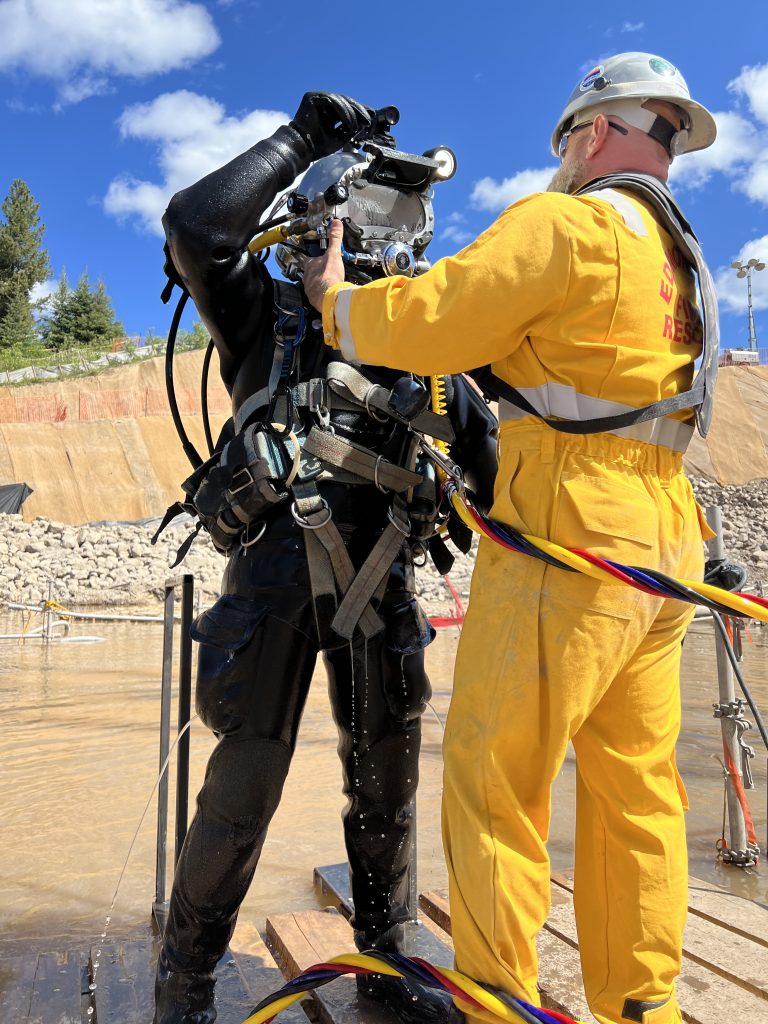
Commercial subsea technicians rely on surface-supplied air systems connected via heavy-duty umbilical cords. Surface supervisors monitor diver breathing gas pressure, suit temperature, and video telemetry continuously from surface control stations.
Conclusion
Sustaining civil subsea infrastructure requires continuous vigilance, advanced diagnostic technology, and proven repair methodologies. By combining ultrasonic testing, acoustic sonar mapping, anti-washout concrete restoration, and strict Delta-P hazard controls, asset managers eliminate operational risks and protect critical marine infrastructure. Investing in scheduled subsea evaluations ensures long-term structural resilience, regulatory compliance, and cost-effective asset management.